While some animals—like peacock spiders—put on elaborate dances to impress potential mates, others keep things simpler. Predatory mites in the family Phytoseiidae (Acari: Mesostigmata) may not be flashy, but they have their own unique mating routines.
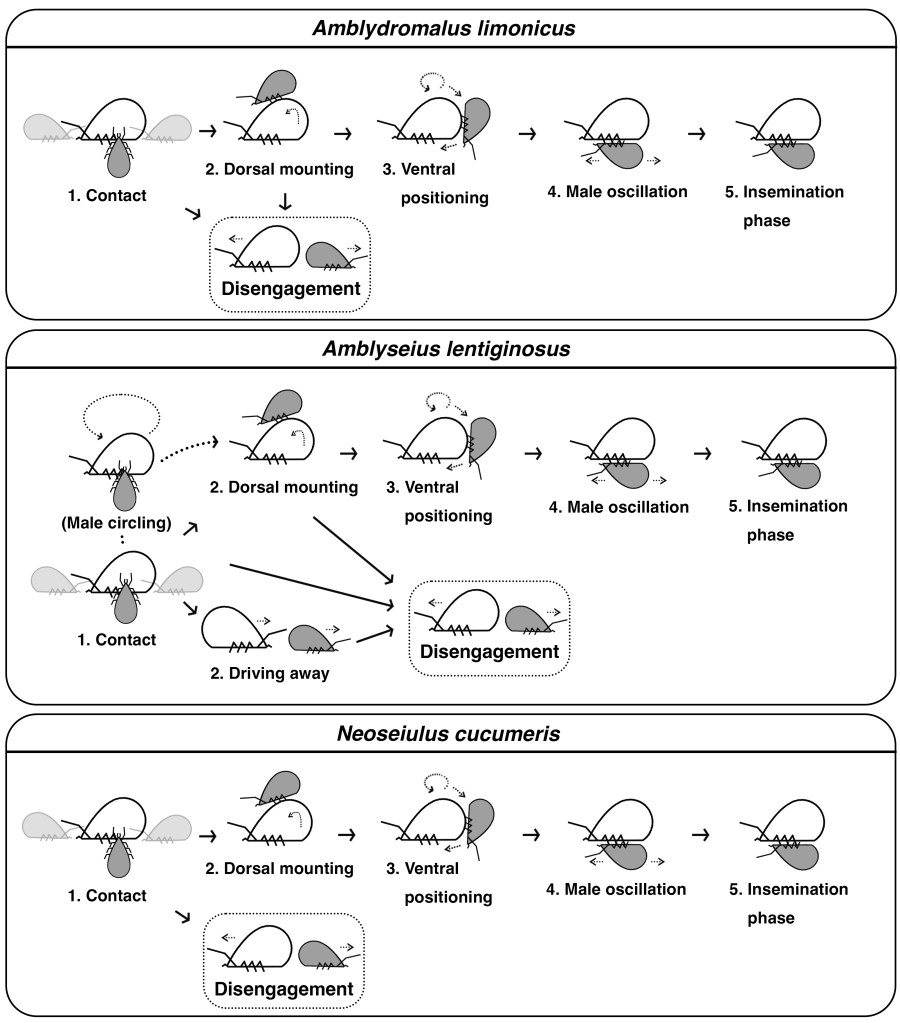
In these mites, the males take the lead. They actively search for females and, once they find one, begin a carefully choreographed courtship. This usually starts with a gentle tap from their front legs, followed by climbing onto the female’s back. After positioning themselves, they move underneath to align belly-to-belly, where mating takes place.
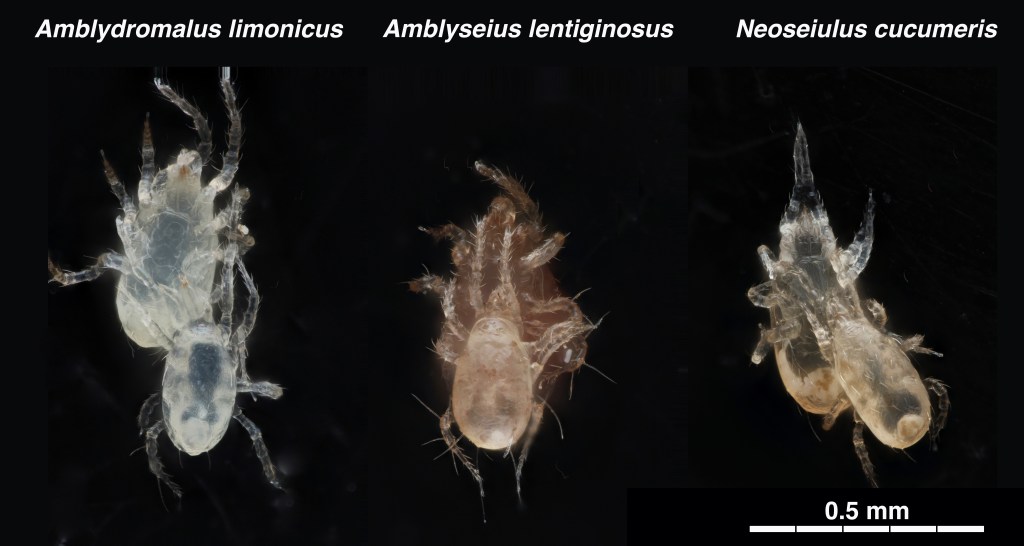
In three closely studied species—Amblydromalus limonicus, Amblyseius lentiginosus, and Neoseiulus cucumeris—this process follows five clear stages: contact, mounting, positioning, oscillation (a kind of shaking movement), and finally insemination. Despite being small and often overlooked, these mites show surprising complexity in their reproductive behaviour—each move fine-tuned by evolution to ensure the next generation.
During mating, males transfer sperm via a special structure on their legs called the spermatodactyl. The female stores the sperm in internal sacs, which she may use throughout her life. While some species only need to mate once, others may require multiple inseminations to stay fertile.
Article
 miteykeshi.blog