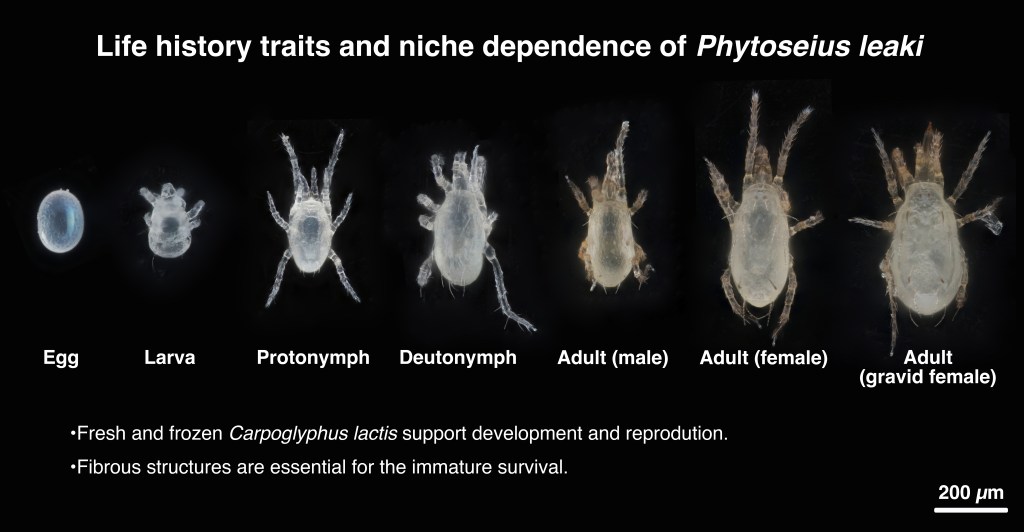
The surface structure of plants can make a big difference in how well tiny predatory mites like Phytoseius leaki grow and survive, but scientists still know little about their specific needs. In our study, we looked at how different materials—such as fine fibres and hairy plant leaves—affect the life cycle of this mite. We found that young mites could not grow properly in smooth, artificial environments without any fibrous material, even when they had plenty of food and water. They barely fed and died early, possibly because the setting was too stressful. When we compared fabric to the hairy leaves of woolly nightshade (Solanum mauritianum), the mites developed faster on the leaves but didn’t live as long or produce as many eggs—possibly due to the plant’s natural chemicals. We also tested feeding the mites live or frozen eggs of another mite species (Carpoglyphus lactis), and found both types worked, though frozen eggs were cleaner and easier to manage. Overall, the study shows how important plant surface features are for this mite’s development and hints that leaf hairs might help determine where it can live—and how it might be used to control pests on fuzzy-leaved plants.
Article
 miteykeshi.blog